
What we do
We build pressure-treated softwood sleeper beds as standalone planted structures, as L-shaped corner forms, as long runs against fencing, and as the planted edge of larger compositions. Where the budget supports it, we step up to oak. We line the inside, drain the base, and finish the joinery so no end-grain or fixings are visible from any approach.
How we approach it
The detail is in the joinery. Corners are rebated where structural load matters; tops are capped where the eye goes. Internal lining is heavy-duty pond liner cut to size and fixed before fill. Soil composition is graded for what's planted into the bed, not just whatever spoil is on site.
Joinery, not stacking. Every cut accounted for.
Materials
200mm × 100mm pressure-treated softwood sleepers as standard, rated for fifteen years exterior life. 250mm × 125mm green oak where the budget and aspect support it — heavier section, longer service life, weathers to silver-grey. Stainless steel fixings throughout. Heavy-duty butyl pond liner for soil contact. Free-draining loam-based compost.
In practice
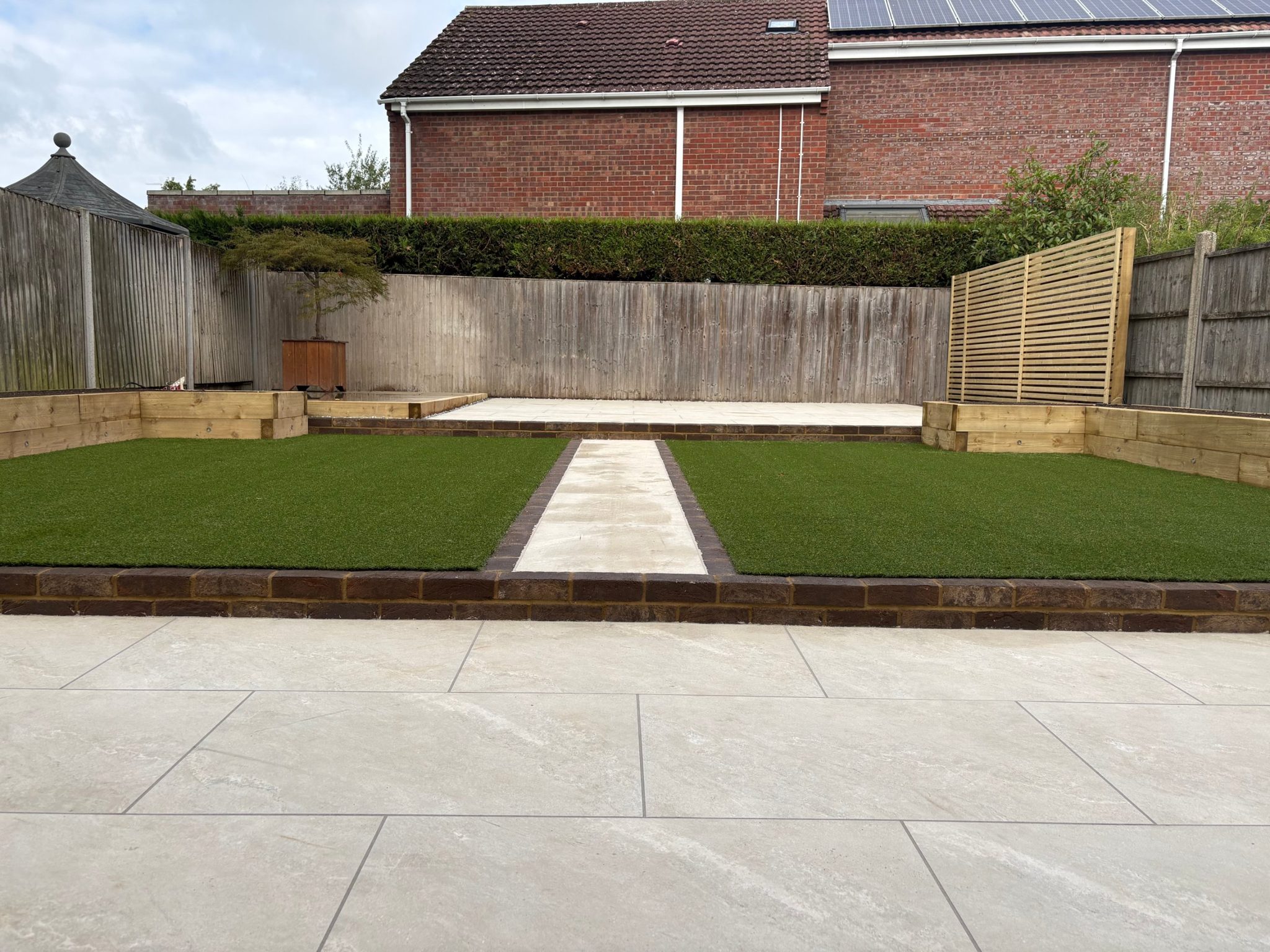
See Three-tier garden, Fareham 2026 for symmetrical raised sleeper beds wrapping both corners of a middle tier, either side of twin lawns, filled and ready for the owners to plant. Or Garden composition, Warsash 2025 for two pressure-treated sleeper beds — one long run against the rear fence, one perpendicular at the corner forming an L-shape. Both lined, drained, and integrated with the wider hardscape.

Planning a garden project? Read our guide on what to think through before you call anyone.
Where we build it
Sleeper structures are a regular part of our builds in Park Gate, Hedge End family gardens, Locks Heath and new-build Whiteley gardens.